-

Annual Family Conference 2023
Join the NTSAD Community from June 1-4, 2023 in Reston, Virginia.
We Care for Rare
Meet Rare Families. Read More› ‹- 1
- 2
- 3
- 4
- 5
- 6
- 7



Latest News
-
Community News
Read NTSAD's latest e-newsletter! Sign up to receive next month's at the bottom of the home page. Read More -
-
- 1
- 2
- 3
- 4
National Tay-Sachs & Allied Diseases Association (NTSAD) leads the worldwide fight to treat and cure Tay-Sachs, Canavan, GM1, and Sandhoff diseases by driving research, forging collaboration, and fostering community. Supporting families is the center of everything we do.
- Default
- Title
- Date
- Random





NTSAD - What is a lysosome and what is a lysosomal storage disorder?
- Details
- Category: All about Lysosomal Storage Disorders
Lysosomes are the cell’s recycling center. They contain digestive enzymes; responsible for breaking down debris in the cell into reusable parts.
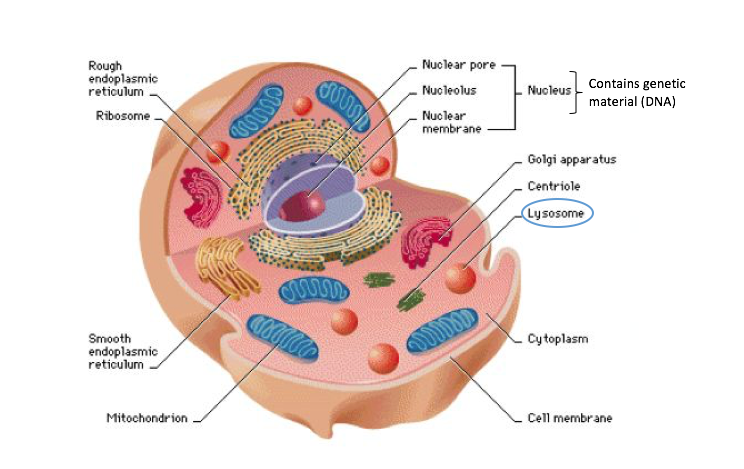
The Cell. Image from: https://awbionotes.wordpress.com/tag/animal-cell/
A lysosomal storage disorder occurs when one of these enzymes is not functioning correctly. When the enzyme does not function correctly, there is a build up of undigested debris (substrate) in the lysosome. This substrate is usually a fatty substance called a sphingolipid. This build up eventually leads to cell degeneration. This then results in the accumulation of substrate in various tissues and organs of the body, causing these organs to function less efficiently, resulting in progressive deterioration in physical and/or mental state, and eventually death.
A visual representation:
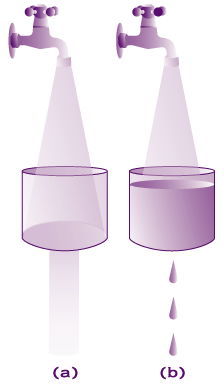
a) In most individuals the substrate (water) can be degraded efficiently by adequate enzyme volume (hole in sink).
b) In affected individuals the amount of enzyme is insufficient to efficiently degrade the substrate and it accumulates. It is this accumulation that causes the disease.